How to Choose the Right Sight Glass Material: Borosilicate, Quartz, Sapphire or Aluminosilicate?
Choosing the right sight glass material is one of the most important decisions when designing industrial process equipment. The material directly affects pressure resistance, thermal performance, chemical compatibility, service life, and maintenance costs. Whether you are designing a pressure vessel, chemical reactor, pharmaceutical production line, or food processing system, selecting the correct material can improve operational safety and reduce long-term maintenance expenses.
Quick Answer:
There is no single “best” sight glass material. Borosilicate glass is ideal for most industrial applications, quartz glass performs well in extremely high-temperature environments, sapphire glass is preferred for ultra-high-pressure systems, while aluminosilicate glass offers an excellent balance between strength and cost.
Table of Contents
- Why Material Selection Matters
- Borosilicate Glass
- Quartz Glass
- Sapphire Glass
- Aluminosilicate Glass
- Material Comparison Table
- Temperature Comparison
- Pressure Comparison
- Chemical Resistance
- Cost Comparison
- How to Select the Right Material
- Frequently Asked Questions
Why Material Selection Matters
Many engineers focus only on the dimensions of the sight glass when selecting components, but material selection is equally important. A sight glass installed in an unsuitable environment may suffer from thermal shock, corrosion, scratches, pressure failure, or premature breakage.
Industrial applications often involve harsh operating conditions including aggressive chemicals, high temperatures, steam, vacuum, and cyclic pressure changes. Therefore, selecting the correct material not only improves operational reliability but also significantly reduces replacement frequency and maintenance costs.
Different materials have unique advantages. Some provide excellent optical clarity, while others excel in mechanical strength or thermal stability. Understanding these characteristics allows engineers to make informed decisions based on their actual operating conditions rather than choosing solely based on price.
Expert Tip
Before selecting a sight glass material, always define the operating temperature, working pressure, chemical medium, cleaning process, and expected service life. These five parameters determine the most suitable material.
Borosilicate Glass
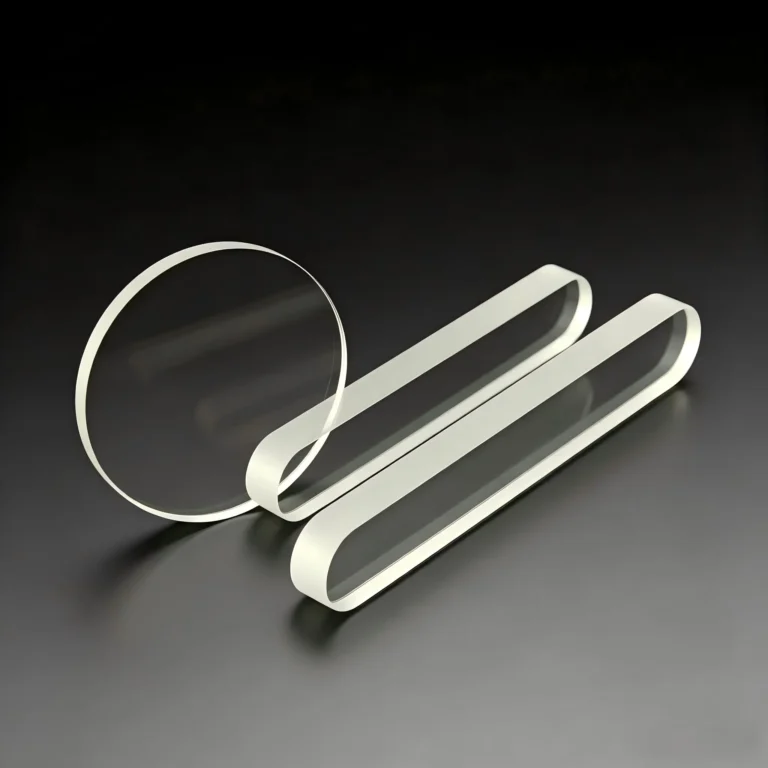
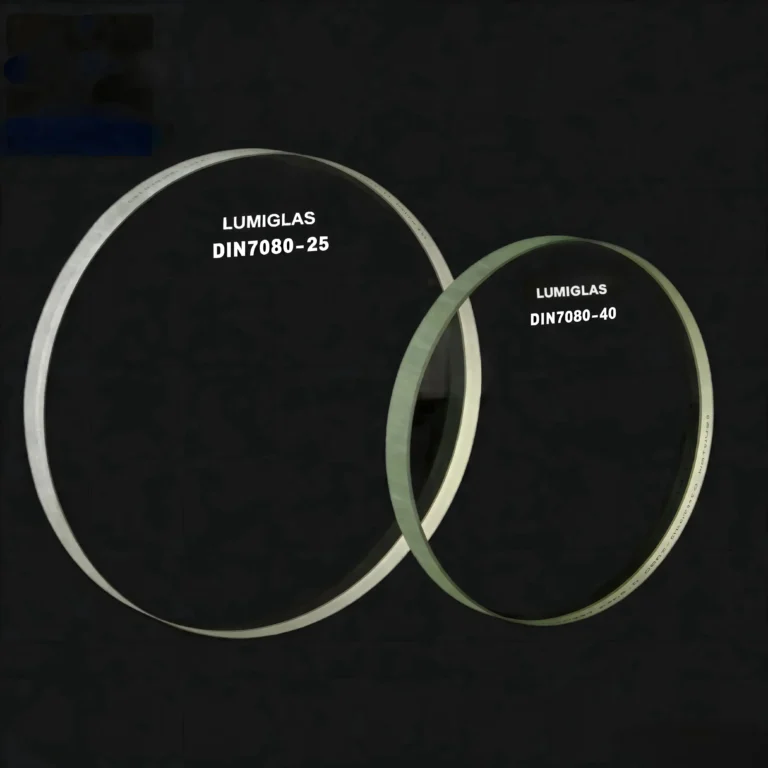
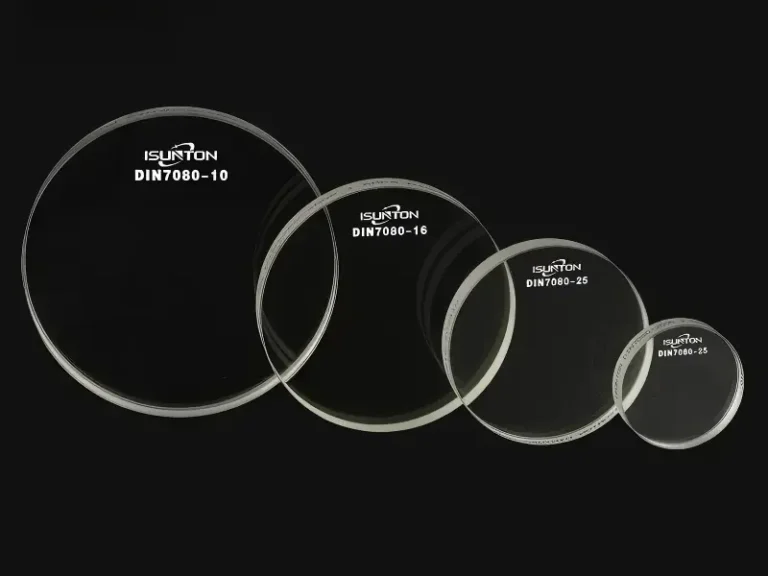
Borosilicate glass is by far the most widely used material for industrial sight glasses. It offers an excellent combination of transparency, chemical resistance, thermal shock resistance, and affordability. Most industrial sight glasses manufactured according to DIN 7080 and DIN 7081 standards are made from borosilicate glass.
Thanks to its low coefficient of thermal expansion, borosilicate glass can withstand rapid temperature changes much better than ordinary soda-lime glass. It is suitable for many industrial sectors including chemical processing, pharmaceutical manufacturing, food production, brewing, water treatment, and laboratory equipment.
Advantages
- Excellent transparency
- Very good thermal shock resistance
- Strong chemical resistance
- Low maintenance requirements
- Excellent cost-performance ratio
- Suitable for most industrial applications
Typical Applications
- Chemical reactors
- Pressure vessels
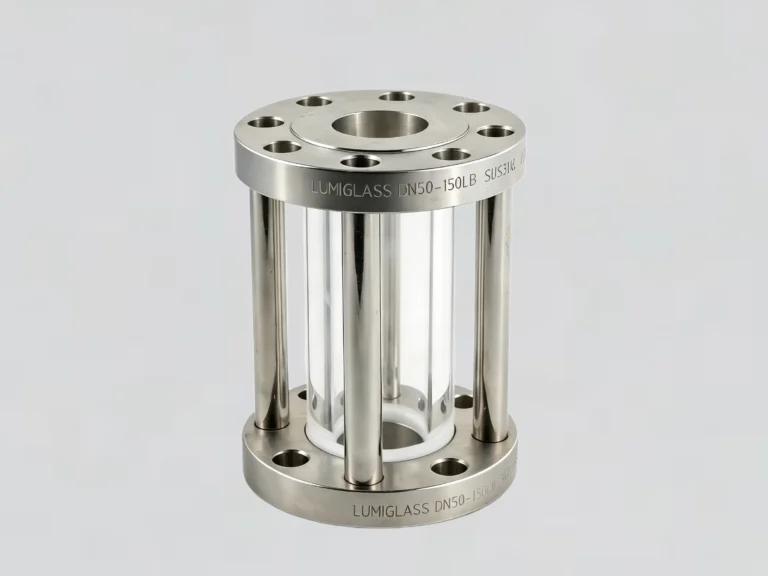
- Pipeline sight glasses
- Level gauge glasses
- Food processing equipment
- Pharmaceutical production lines
Quartz Glass
Quartz glass, also known as fused silica glass, is manufactured from high-purity silicon dioxide. Compared with borosilicate glass, quartz glass provides significantly higher temperature resistance while maintaining excellent optical transmission.
One of its greatest advantages is its ability to maintain structural stability at temperatures exceeding 1000°C. It is therefore widely used in semiconductor manufacturing, UV optical systems, laboratory furnaces, aerospace applications, and high-temperature industrial equipment.
Quartz glass also exhibits exceptional resistance to thermal shock, allowing it to perform reliably in environments with rapid heating and cooling cycles.
However, quartz glass generally has lower mechanical strength than sapphire and may not always be the best choice for ultra-high-pressure applications.
Advantages
- Outstanding high-temperature performance
- Excellent UV transmission
- Very low thermal expansion coefficient
- Excellent optical clarity
- High purity material
Recommended Applications
- Semiconductor equipment
- Vacuum systems
- High-temperature furnaces
- Optical instruments
- Laboratory equipment
Continue Reading
In the next section, we will compare Sapphire Glass and Aluminosilicate Glass in detail, including pressure capability, chemical resistance, cost comparison, material selection guide, a comprehensive comparison table, FAQs, and expert recommendations for industrial applications.
Sapphire Glass
Sapphire glass is one of the strongest transparent materials used in industrial applications. It is made from single-crystal aluminum oxide (Al₂O₃), which gives it exceptional hardness and extreme resistance to pressure, scratching, and wear.
Compared with borosilicate and quartz glass, sapphire glass performs significantly better in high-pressure and abrasive environments. It is often used in mission-critical applications where failure is not acceptable.
Although it is more expensive, its durability and long service life make it the preferred choice for extreme industrial conditions.
Advantages
- Extremely high mechanical strength
- Excellent pressure resistance
- Superior scratch resistance
- Long service life
- High reliability in extreme environments
Typical Applications
- Ultra-high pressure sight glass systems
- Defense and aerospace equipment
- High-end chemical reactors
- Critical observation windows
Aluminosilicate Glass
Aluminosilicate glass offers a balanced performance between borosilicate and sapphire glass. It has higher strength than borosilicate and better thermal resistance, while still maintaining a reasonable cost level.
It is widely used in industrial environments that require improved durability without the high cost of sapphire glass. It is often found in advanced industrial sight glass systems and reinforced viewing windows.
Material Comparison Table
| Material | Temperature Resistance | Pressure Resistance | Chemical Resistance | Cost Level |
|---|---|---|---|---|
| Borosilicate | High | Medium | High | Low |
| Quartz | Very High | Medium | Very High | Medium-High |
| Sapphire | Very High | Very High | Very High | High |
| Aluminosilicate | High | High | High | Medium |
How to Select the Right Material
Choosing the right sight glass material depends on your actual working conditions. Engineers should evaluate temperature, pressure, chemical medium, and mechanical stress before making a decision.
For general industrial use, borosilicate glass is usually sufficient. For high temperature environments, quartz glass is recommended. For high pressure or safety-critical systems, sapphire glass is the best choice. Aluminosilicate glass is suitable when both strength and cost need to be balanced.
Expert Recommendation:
If you are unsure, always start with borosilicate glass as the baseline. Then upgrade to quartz or sapphire based on pressure and temperature requirements.
Frequently Asked Questions
1. What is the most commonly used sight glass material?
Borosilicate glass is the most widely used due to its balanced performance and cost.
2. Which material is best for high pressure?
Sapphire glass is the best choice for ultra-high pressure environments.
3. Can quartz glass be used for pressure systems?
Yes, but it is more suitable for high temperature rather than extreme pressure.
4. Why is sapphire glass so expensive?
Because it is a single-crystal material with extremely high hardness and complex manufacturing process.
5. Can materials be customized?
Yes, all materials can be customized based on size, shape, and industrial standards.
Need Custom Sight Glass Solution?
We provide industrial-grade sight glass including borosilicate, quartz, sapphire, and aluminosilicate materials for global customers.
© 2026 Lumistar Technical Articles. All rights reserved.